
Why Am I Still Tired Even After Rest? Understanding Burnout, Survival Mode, and Nervous System Fatigue

Updated: Aug 5
You slept. You canceled plans. You lay on the couch. You did the “responsible” thing and rested.
So why do you still feel like your body is made of wet cement?
That kind of tired can feel confusing, even a little scary. It’s especially frustrating when people suggest the usual fixes, like “just get more sleep” or “take a break,” and you’ve already tried both. If you’ve been searching “why am I always tired, even after rest” or "why am I always exhausted," there’s a good chance you’re not just sleepy. You might be depleted.
Sleep helps a lot of things. But it doesn’t always repair a nervous system that has been bracing for too long, emotions that haven’t had room to move, or a body stuck in a low-grade threat response.

Sleep and rest are not the same thing
Sleep is one form of rest, but it’s not the whole menu. Sleep isn't the only kind of rest your nervous system needs!
You can sleep eight hours and still wake up drained if your body spent the night tense, your dreams were stressful, or your mind never really felt safe enough to settle. You can also “rest” by scrolling, zoning out, or lying down while still mentally replaying conversations, worrying about money, or tracking everyone else’s mood.
That’s not failure. That’s your system trying to recover while still running background programs.
Think of your body like a phone. Sleep is the charger. But if you’ve got 47 apps open, your brightness is maxed out, and the phone is overheating, charging takes longer. Sometimes the battery barely climbs at all.
Real rest usually includes at least one of these:
Physical rest
Less strain on your muscles, joints, and body.
Mental rest
A break from planning, deciding, analyzing, and remembering.
Emotional rest
Space to stop performing, pleasing, suppressing, or holding it together.
Sensory rest
Relief from noise, screens, clutter, bright light, and constant input.
Social rest
Time away from people who drain you, or time with people who let you fully exhale.
If you’re missing the kind of rest you actually need, more sleep may help a little, but it won’t touch the deeper exhaustion.
Being sleepy is different from being depleted
Sleepiness and depletion can overlap, but they don’t feel the same.
Sleepiness is usually your body asking for sleep. Depletion is often your whole system asking for safety, nourishment, space, and recovery.
Sleepy | Depleted |
Your eyelids feel heavy | Your whole body feels heavy |
A nap often helps | A nap might not change much |
You feel drowsy or foggy | You feel emotionally flat, brittle, or overwhelmed |
You crave sleep | You crave escape, quiet, or being left alone |
You can usually bounce back | You feel like you have no bounce left |
When you’re sleepy, rest can feel satisfying. You lie down, drift off, and wake up with at least a little more capacity.
When you’re depleted, rest can feel strangely ineffective. You might spend the whole day doing “nothing” and still feel exhausted by dinner. You might sleep late and wake up with the same pressure in your chest, the same dread, or the same sense that everything is too much.
That’s often because the fatigue isn’t only about energy. It’s about load.
The load might be emotional, relational, financial, sensory, physical, or nervous system related. It might be the result of burnout, survival mode, nervous system fatigue, tired all the time, chronic fatigue from stress, or feeling exhausted even after sleeping.

Nervous system fatigue happens when your body has been bracing too long
Your nervous system is always scanning. It asks, “Am I safe? Do I need to act? Can I relax?”
When life feels steady, your body can move between activation and rest. You handle stress, then come down. You get startled, then settle. You have a hard conversation, then recover.
But if stress keeps coming, or if you’ve lived through situations where you had to stay alert, your body may start to treat “on guard” as the default setting.
That’s where nervous system fatigue can show up.
It can feel like:
Waking up already tense
Feeling wired and tired at the same time
Startling easily
Getting irritated by small sounds or interruptions
Feeling unable to relax, even when nothing is wrong
Needing a lot of downtime after normal tasks
Feeling foggy, slow, or disconnected
Crashing after social events, errands, or conflict
Feeling like your body is saying “no” before your mind even understands why
This isn’t laziness. It’s not weakness. It’s a body that has been spending too much energy on protection.
When your nervous system is stuck on alert, lying down may stop your movement, but it doesn’t always tell your body the danger has passed.
That line matters. Because a lot of people blame themselves for not resting “right.” They think, “I had the weekend off. Why don’t I feel better?”
But if your body doesn’t feel safe, supported, or unburdened, stillness can become another place where stress catches up with you.
If you're not feeling like yourself anymore, my article Understanding Why You Don't Feel Like Yourself Anymore goes into more detail on this.
You may also enjoy some gentle ways to start feeling like yourself again with How to Feel Like Yourself Again.
Hypervigilance can make rest feel impossible
Hypervigilance means your system is watching for problems, even when you’re trying to relax.
It can show up in obvious ways, like scanning a room, checking your phone constantly, or being unable to fully settle around certain people.
It can also be subtle.
Maybe you’re always listening for a change in someone’s tone. Maybe you can’t enjoy a quiet moment because you’re waiting for the next demand. Maybe you lie down and suddenly remember 12 things you forgot to do. Maybe your body stays tense because rest used to get interrupted, criticized, or punished.
Hypervigilance burns energy. A lot of it.
It’s like leaving your car running in the driveway all night. You didn’t drive anywhere, but the fuel still drained.
This is one reason sleep doesn’t always restore you. If your system stays alert overnight, your body may not get the same quality of recovery. You might technically be asleep, but still wake up with clenched muscles, a tight jaw, shallow breathing, or a racing mind.
And during the day, hypervigilance can make small tasks feel bigger than they are. A grocery store isn’t just a grocery store. It’s lights, noise, decisions, people, time pressure, and the need to stay aware of everything around you.
No wonder you’re tired.
When your brain and body are constantly scanning for danger, even ordinary life becomes expensive.
Emotional exhaustion makes everything heavier
Emotional exhaustion is a different kind of tired. It’s the fatigue that comes from caring, holding, managing, grieving, masking, or absorbing too much for too long.
You might be emotionally exhausted if you notice:
You have less patience than usual
Small requests feel unbearable
You feel numb instead of sad or angry
You cry more easily, or can’t cry at all
You avoid messages because replying feels like too much
You love people, but don’t have the energy to connect
You feel guilty for needing space
You keep saying “I’m fine” because explaining would take too much effort
Emotional exhaustion often builds in people who are used to functioning under pressure. You may keep showing up, keep doing the tasks, keep being “nice,” keep solving problems, and keep pushing your own needs to the side.
From the outside, you might look capable. Inside, you might feel like one more thing will make you collapse.
This is why a day off doesn’t always fix it. If the emotional load is still sitting in your body, your calendar can be empty, and your system can still feel crowded.
If you want to learn more about feeling emotionally numb, check out my article "Why do I feel emotionally numb?"
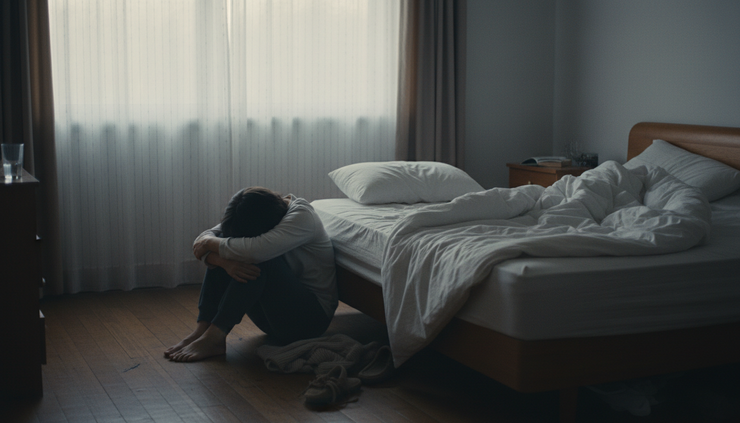
Why sleep doesn’t always restore you
Sleep is powerful, but it’s not magic. It can’t always undo weeks, months, or years of ongoing stress, poor nourishment, emotional strain, pain, trauma responses, or a life that gives you no room to recover.
Many people who always feel tired even after sleeping are dealing with more than a lack of sleep.
Here are a few reasons you may still feel tired after sleeping.
Your body is resting, but your mind is still working
If you fall asleep while worrying, planning, or replaying the day, your brain may stay active. You might wake up feeling like you spent the night in a meeting with your own thoughts.
Your mind needs off-ramps. Without them, sleep can become the only time your brain tries to process everything.
You're in survival mode! You can read about survival mode more in-depth here in my article What does living in survival mode feel like?
Your stress hormones may be keeping you activated
Stress can make the body feel alert when it needs rest. You might feel exhausted but unable to nap, or ready for bed all day and wide awake at night.
This “wired but tired” feeling is common when you’ve pushed past your limits for too long.
Your rest doesn’t match your fatigue
If you’re emotionally exhausted, a nap may not be enough. If you’re mentally overloaded, watching a show with a complicated plot might not rest you. If you’re socially drained, texting five people from bed won’t feel restorative.
The question isn’t only “Did I rest?”
It’s also “What kind of tired am I?”
Your life keeps asking for more than you can recover from
Sometimes the problem isn’t your bedtime. It’s the math.
If your daily stress is higher than your daily recovery, fatigue builds. You can be doing your best and still be under-supported.
That can happen during caregiving, grief, chronic stress, financial pressure, health issues, relationship strain, parenting, trauma recovery, or long periods of overwork.
What actually helps when you’re depleted
When you’re deeply tired, the goal isn’t to become a whole new person by Monday. The goal is to send your body small, repeated signals that it can stop bracing.
Try gentle things first. Big self-improvement plans can become another source of pressure.
Lower the number of inputs
If your system is overloaded, reduce what it has to process.
That might mean:
Sitting in a quiet room for 10 minutes
Turning off background noise
Dimming lights in the evening
Putting your phone in another room
Choosing simple food, simple clothes, or a simple plan
Taking one errand off the list
Less input gives your nervous system fewer things to track.
Let your body complete the stress cycle
Stress creates energy in the body. If that energy has nowhere to go, it can sit there as tension, agitation, or fatigue.
You don’t need an intense workout. Try:
A slow walk
Gentle stretching
Shaking out your arms and legs
Humming or singing softly
Longer exhales
Pushing your feet into the floor
Wrapping yourself in a blanket
These are small ways to remind your body, “We’re here. We’re safe enough right now.”
Stop treating every pause as a chance to catch up
This one is hard.
A lot of people use rest time to answer messages, order groceries, research problems, plan meals, fold laundry, or mentally prepare for the next thing. That may be necessary sometimes, but it’s not the same as recovery.
Try protecting a small pocket of time where you’re not producing, fixing, tracking, or responding.
Even 15 minutes counts if it’s honest.
Name what you’re carrying
You don’t have to write a perfect journal entry. Just name the load.
Try finishing these sentences:
“I’m tired because I’ve been holding…”
“My body has been bracing for…”
“What I haven’t had space to feel is…”
“One thing I need less of is…”
“One thing I need more of is…”
Naming the load can reduce the sense that you’re just mysteriously broken.
Choose safe connection, not more performance
Some people restore you. Some people require you to perform.
When you’re depleted, choose carefully. A short conversation with someone who gets it can help your system settle. A long conversation where you have to explain, defend, or manage their reaction may drain you more.
Safe connection sounds like:
“You don’t have to fix this. Can you just sit with me?”
“I don’t have energy to talk much, but I’d like company.”
“Can we do something low-key?”
“I need support, not advice right now.”
The right person won’t make you earn care by being entertaining.
If you're looking for a supportive space to reconnect with yourself and move forward, coaching may be a good fit. If you feel like you're carrying unresolved pain from the past, therapy may also be an important part of your healing. Many people benefit from both.
You can schedule a free Hearth conversation here

When tiredness deserves extra support
Sometimes fatigue is tied to stress and emotional overload. Sometimes it’s also connected to medical issues, medication side effects, sleep disorders, depression, anxiety, nutritional deficiencies, hormonal changes, chronic illness, or pain.
It’s a good idea to get support if:
Fatigue is new, intense, or not improving
You’re sleeping much more or much less than usual
You feel hopeless, numb, or unable to function
You’re having panic symptoms or frequent shutdowns
You’re relying on alcohol, substances, or risky behaviors to cope
You have symptoms like dizziness, shortness of breath, chest pain, unexplained weight changes, or persistent pain
You’re having thoughts of harming yourself
If you’re in immediate danger or might hurt yourself, reach out to your local crisis line.
Getting help doesn’t mean you failed at rest. It means your body and mind deserve more support than a nap can give.
The real takeaway
If you’re still tired after rest, don’t rush to shame yourself.
Your body may not be asking for more discipline. It may be asking for safety. For quiet. For fewer demands. For emotional honesty. For support. For a life where recovery isn’t treated like a luxury.
Sleep matters, yes. But if you’re depleted, you may also need to lower the load you’re carrying and give your nervous system time to believe it doesn’t have to stay on guard.
Start small. Make one thing quieter. Cancel one nonessential demand. Take one slow breath without turning it into a project.
Then listen.
Your exhaustion may be trying to tell the truth before the rest of you is ready to say it out loud.
FAQ (Frequently Asked Questions)
Why am I still tired even after rest or sleep?
Getting enough hours of sleep doesn't always mean your body is fully recovering. Chronic stress, burnout, emotional exhaustion, nervous system dysregulation, medical conditions, poor sleep quality, or ongoing life demands can all leave you feeling tired even after a full night's sleep. If your fatigue is persistent or severe, it's important to talk with a healthcare professional.
Can stress make you tired all the time?
Yes. Long-term stress keeps your nervous system working harder than you may realize. When your body stays in a constant state of alertness, it uses more energy throughout the day and may struggle to recover fully, even during sleep. Over time this can lead to ongoing mental, emotional, and physical fatigue.
What is nervous system fatigue?
Nervous system fatigue is a term often used to describe the exhaustion that can happen after prolonged stress, burnout, or spending long periods in survival mode. It can feel like you're constantly drained, emotionally overehwlmed, shutdown, easily startled, or unable to relax - even when you're trying to rest.
Why doesn't sleep fix burnout?
Sleep is an important part of recovery, but burnout affects more than your sleep schedule. Emotional overload, chronic stress, and ongoing pressure can leave your body (and mind) feeling depleted even after a good night's rest. Rcovery often requires reducing stress, meeting emotional needs, and creating opportunities for genuine restoration alongside healthy sleep.
When should I see a doctor about constant fatigure?
If your fatigue is new, severe, getting worse, or interfering with daily life, it's a good idea to see a healthcare professional. Constant tiredness can sometimes be related to medical conditions such as thyroid disorders, anemia, sleep disorders, nutritional deficiencies, medication side effects, or other health concerns. Seeking medical advice can help rule out underlying causes and ensure you get the right support.


Comments